Recognizing Peptide Purity: What 99%+ Truly Suggests
Bpc-157, Tb-500, Ghk-cu
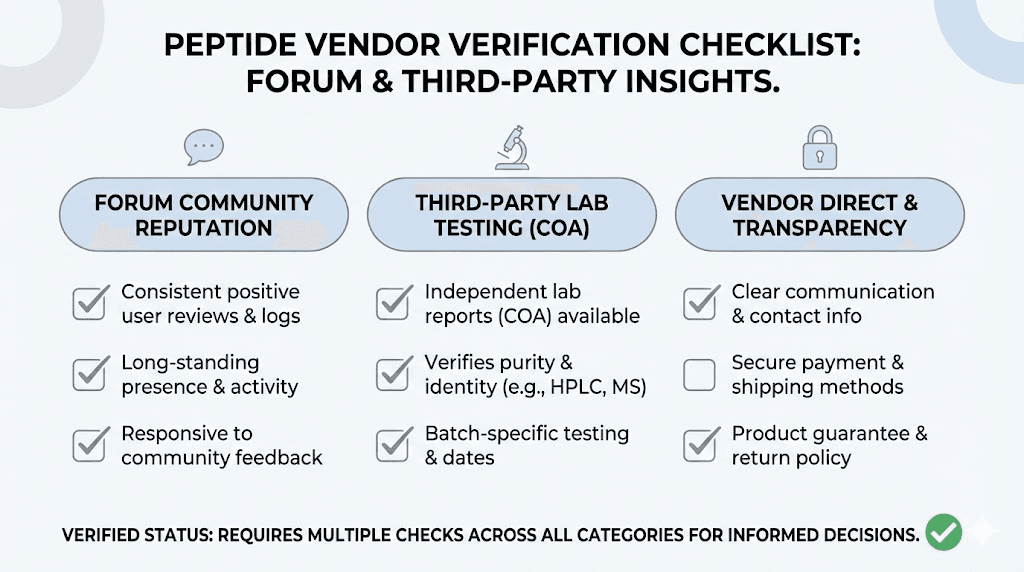
Profound Peptide is a chemical distributor and not a compounding pharmacy or chemical compounding center as defined under 503A of the Federal Food, Medication, and Cosmetic Act. Profound Peptide is not an outsourcing facility as specified under 503B of the Federal Food, Medicine, and Aesthetic Act. The items provided by Profound Peptide are not meant to detect, deal with, cure, or avoid any type of illness. They bind to certain targets - Most peptides function by attaching (with high specificity and fondness) to receptors on cell surface areas, or in some cases to enzymes or other healthy proteins. The conclusive method to validate a peptide is with research laboratory analysis using HPLC (High-Performance Fluid Chromatography) for pureness and MS (Mass Spectrometry) for molecular weight identification. Leading vendors like Protide Health have independent laboratories execute these examinations and supply the results openly, conserving the researcher or organization the substantial expense of exclusive testing.- These products have actually not been examined or authorized by the FDA or any regulatory body for medical applications.
- To enhance manufacturing for medical or business use, peptide synthesis business must partner with a chemistry reagents maker.
- Peptide-based medicine prospects consist of a variety of structures, from little to large, consisting of cyclic or branched constructs, conjugation to antibodies, or unification of radionuclides.
- If the primary peak has a visible "shoulder"-- a bump on one side-- that typically suggests a carefully related contamination (like a deletion peptide) that the column couldn't completely resolve.
Driven By Science Trusted For Research Study Quality
Semaglutide conjugated with C18 fatty acid was approved for administration by once-weekly subcutaneous injection276,277, with better plasma stability than various other GLP-1 analogues. Even more encouragingly, the co-formulation of semaglutide with sodium N- [8-( 2-hydroxybenzoyl amino] caprylate (SNAC) was accepted for dental management to treat T2DM. Co-formulation with SNAC avoids the destruction of semaglutide in the stomach by reducing the effectiveness of gastrointestinal enzymes. The hydrophobic SNAC particles additionally enhance the lipophilicity of semaglutide, therefore boosting its transcellular absorption with the gastric membrane and its transport into the systemic circulation278,279.
Authentic research study peptides feature a Certification of Evaluation showing HPLC pureness testing and mass spectrometry results from an independent laboratory. You can validate authenticity by examining the COA confirmation code with the testing lab's website. Yes, research study peptides are lawful in the UK when sold and acquired purely for research laboratory research objectives.Need Recent, Independent Coas
These peptides can be further modified in a site-specific manner with chemical synthesis or genetic code growth to boost their stability and physiological activity. Tiny molecule medicines are recognized to have an extended healing background with inherent advantages, including reduced manufacturing costs and list price, oral management, and great membrane penetration ability33. Both normally drawn out and chemically manufactured small molecules show affordable price benefits compared to peptides and biologics (proteins or antibodies) 34,35. Oral management of small particles has the benefits of much better security and boosted patient compliance, while their small dimension also allows them to penetrate the cell membrane to target intracellular molecules33,36. However, their little dimension also means that it is tough for them to inhibit big surface communications, such as protein-protein interactions (PPIs), properly. PPIs normally occupy a call location of 1500-- 3000 A2, while small particles just cover Clinical Research 300-- 1000 A2 of the healthy protein surface, as a result of their restricted molecular size37.